
Every Remembrance Day, Britain falls silent for two minutes, when the noise of everyday life gives way to quiet reflection about the brave people who lost their lives in times of war.
Service personnel who fought and died in conflict, alongside civilians whose lives were lost or transformed, will be commemorated at ceremonies on Sunday 8th November at 11am.
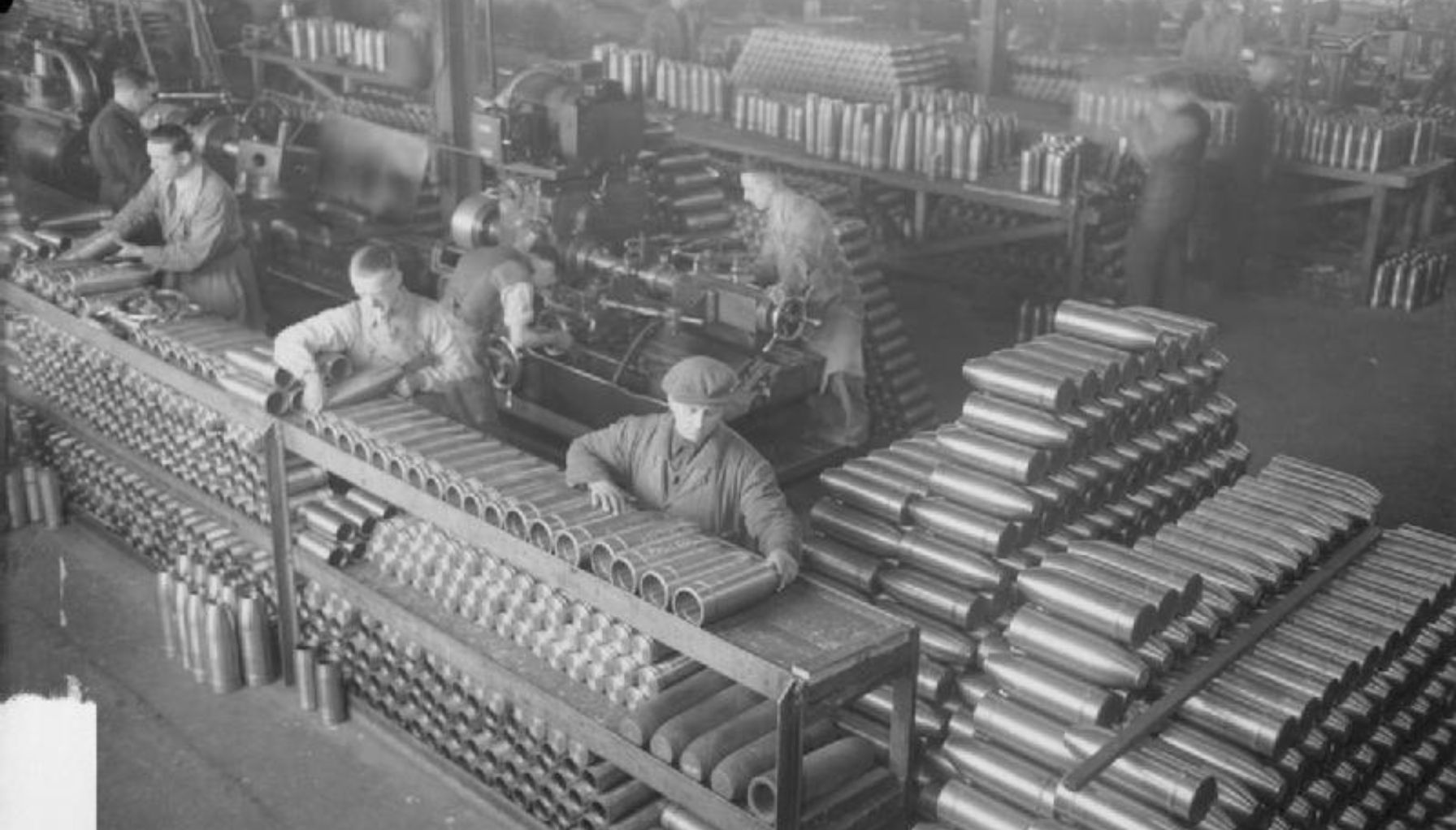
© Public Domain
As we remember the courage and sacrifices of past generations, we can also reflect on a less visible consequence of war – the lasting health effects endured by survivors.
The soundscape of wartime Britain
During the Second World War, Brits were familiar with the constant noise of approaching aircraft, air raid sirens, explosions, anti-aircraft guns, artillery fire and the relentless machinery of factories and shipyards.
When Britain entered the conflict on 3rd September 1939, the threat of aerial attack had already shaped preparations for life on the Homefront. At 11.30am that morning, air raid sirens sounded across London for the first time. The warning proved to be a false alarm, but the sound would become grimly familiar once the Blitz began on 7th September 1940: aerial bombardment lasted until 11th May 1941. During this sustained campaign, Germany’s Luftwaffe bombed London for 57 consecutive nights, before escalating attacks to major industrial and port cities across Britain.
An air raid siren meant families must make their way towards shelters, including corrugated steel Anderson shelters in gardens and indoor Morrison shelters. The Imperial War Museum’s records describe how ARP (Air Raid Precautions) wardens helped guide people into shelters during attacks. In London, Underground stations also became places of refuge during raids.
Finding shelter didn’t necessarily mean escaping the noise. People could hear aircraft overhead, anti-aircraft guns responding and bombs falling nearby. For military personnel, exposure was more direct; gunfire, artillery and high explosives could produce extraordinarily intense noise. Decibel measurements can’t convey the fear of waiting for an explosion, or the human consequences of bombardment. However, they can help us understand why damage to people’s hearing was part of war’s physical legacy.
What is noise induced hearing loss?
In medical terms, it can result either from a single exposure to an extremely intense sound, such as an explosion, or from repeated exposure to excessive noise over a longer period. Loud noises can damage structures within the inner ear, maybe permanently.
Sudden acoustic trauma is particularly associated with intense impulse sounds. Modern research from the US National Institute for Occupational Safety and Health notes that sources such as firearms can reach sound pressure levels of 170 to 180 dB or higher. These are peaks rather than sustained average noise levels, so they can’t be compared directly with an eight-hour workplace exposure figure.
The US National Museum of Health and Medicine states that wartime hearing loss is frequently associated with detonations from high explosive artillery, bombs and grenades. Doctors observed that a damaged eardrum didn’t always correspond with the severity of hearing loss, suggesting injuries could occur deeper within the auditory system. Some patients recovered hearing, while others experienced lasting tinnitus.
Common acoustic trauma symptoms include hearing loss, tinnitus, earache and vertigo. After a blast, sounds may seem muffled or distorted, while ringing or buzzing may continue after the external noise has stopped.
The term acoustic shock is sometimes used in relation to sound-related hearing loss, but wartime blast injuries are more appropriately understood in the context of acute acoustic trauma or blast-related hearing damage.
The Homefront and cumulative noise exposure
Britain’s war effort depended on factories, engineering works, docks and shipyards, where employees worked long hours producing and repairing the materials required for national defences. Acoustic conditions varied enormously and reliable retrospective measurements for wartime workplaces are not always available.
Modern industrial data demonstrates why prolonged machinery noise is treated seriously. The Health and Safety Executive states uncontrolled levels of noise reach 85 to 95 dB(A) for a fabrication shop, 90 to 95 dB(A) for pedestal grinding, 95 to 100 dB(A) for hammering steel and 100 to 110 dB(A) for riveting.
These figures can’t be presented as direct equivalents to wartime explosions. A short blast has an extremely high peak, while industrial machinery creates lower sustained or repeatedly recurring exposure. Both can damage hearing, but the exposure is fundamentally different.
For civilians supporting the war effort in noisy industries during WWII, cumulative exposure was a potential route to lasting hearing damage after the conflict ended.
From wartime injury to hearing rehabilitation
It would be wrong to suggest modern audiology research emerged solely as a result of WWII, but the massive number of people exposed to military noise focused greater attention on hearing assessment, damage prevention and rehabilitation.
During the war, clinicians used otoscopes and tuning forks to investigate hearing injuries. The Weber test could help identify one-sided hearing loss, and wearable hearing aids were supplied to some service personnel who had sustained damage. The experience of treating military patients also contributed to the development of audiology as a specialist profession and to growing post-war interest in occupational hearing conservation.
Behind those developments were the people returning from service who found conversations harder to follow, experienced persistent tinnitus, or found sounds were never again as clear as they once were.
What can wartime noise teach us about modern workplaces?
Modern working environments are worlds apart from the conditions faced during wartime Britain, but our historic understanding of hearing damage gives today’s employers an opportunity to manage excessive noise before the real damage sets in.
The UK’s Control of Noise at Work legislation sets upper limits for employee exposure, including peak sound pressure action values that recognise sudden impact noise as a different hazard from sustained exposure.
Noise management should consider the source, level, duration and pattern of exposure. Modern controls can include selecting quieter machinery, maintaining equipment efficiently, isolating noisy processes, using screens and reducing noise at source.
By surrounding noisy machinery or equipment, a suitably designed acoustic enclosure can reduce the amount of sound reaching workers and the wider environment. The historical experience of noise related hearing injury reminds us why excessive sound should never be simply accepted as an occupational hazard.
Acoustic consultancy and noise control services belong to a modern world of risk assessment, engineering controls and hearing conservation. They are far removed from the extraordinary dangers endured during wartime Britain.
On Remembrance Day, our thoughts return first and foremost to the people who served and never returned, those who came home carrying visible and invisible injuries, and the civilians who endured the dangers and uncertainty of a country at war. We will remember them.