Acoustic Enclosures for Industrial, Commercial & Domestic Noise Control

Controlling excess noise is difficult: the surrounding area is affected by reflections, reverberant fields and resonances that can further amplify noise from the original source.

When designing noise control applications you need to satisfy statutory requirements, the community, planning applications, and health and safety. Lighting, ventilation, heating/cooling, weather protection, electrical/data services, feed lines, pollution control and worker access are important considerations, but they must not affect the overall performance of your noise control solution.

Acoustic enclosures surround the sound at source. They can vary in size, depending on the cause of the problem, but the majority are room-sized to mitigate excess noise from boilers, pumps, engines, etc. Whether used in residential, commercial, or industrial settings, acoustic enclosures and canopies help maintain a balance between functionality, comfort and compliance with local regulations, without reducing the efficiency or cleanliness of machinery during normal operations.

Noise enclosures work by combining sound absorption, insulation and controlled ventilation:

  • Absorptive materials: tissue-faced Rockwool insulation internally lines the enclosure to trap and absorb sound energy rather than letting it reflect and amplify, as well as preventing fibre migration.
  • Barrier construction: high-density walls made up of galvanised steel and aluminium block sound transmission to the outside environment.
  • Ventilation & airflow control: acoustic louvres or baffles ensure the enclosed machinery remains cool and functional, while maintaining a silent operation.
  • Access pointslouvre doors, hatches, or removable panels provide maintenance access, while maintaining acoustic integrity.

Modular Enclosures

Every noise challenge is unique: we assess the equipment, environment, and user requirements before designing the right product.

Considerations include:

  • Size & fit: from compact domestic units to large-scale industrial solutions.
  • Customisation: polyester powder coated to your choice of standard RAL colours to blend into surroundings. Special colours available on request.
  • Performance requirements: each acoustic enclosure is designed to meet specific dB reduction targets, depending on the equipment.
  • Environmental conditions: considering location, ventilation needs, and weather resistance.
  • Lab tested: modular enclosure components are lab tested – results available on request.

The Sound Planning Solution

We provide environmental acoustic enclosures to control noise pollution caused by mechanical equipment.

  • Manufactured here in the UK, we use only British materials – no foreign imports.
  • Installations are typically covered under warranty for 15-20 years, depending on the product.
  • All UK-based orders include our initial site survey – certain exclusions may apply depending on site readiness or remote/dangerous access restrictions.
  • Quick turnaround on quotes, manufacture and installation, which can take anywhere from 1 day for small residential spaces, up to 1 month for larger commercial applications.
  • Our enclosures can be adapted to changes in design and operational requirements; they can be extended or modified to suit a change in circumstances and reinstalled without loss of acoustic performance.

Domestic Applications

Local councils in the UK continue to tighten control over excess noise – compliance becomes harder and penalties may increase. In residential areas, noise from equipment such as air conditioning units, heat pumps, and standby generators can cause stress, disturb sleep, and lead to complaints from neighbours.
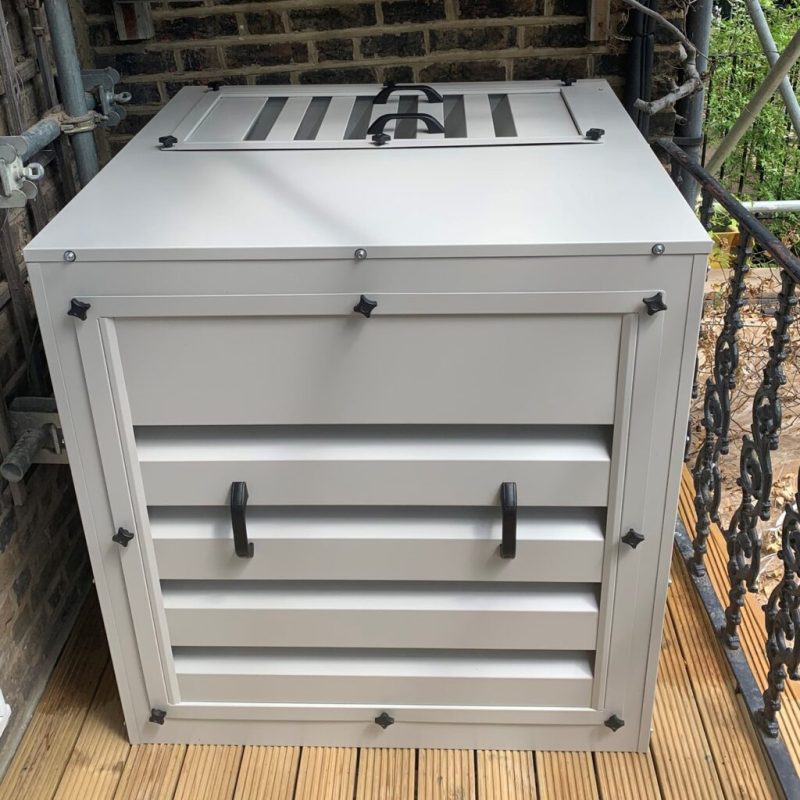
  • UK regulations: under the Noise Act 1996 and local council enforcement, excessive noise at night (11pm–7am) can result in fines or enforcement action.
  • Heat pumps: the UK’s Microgeneration Certification Scheme (MCS) guidelines recommend that air source heat pumps should not exceed 42 dB(A) at 1 metre from the nearest habitable room of a neighbouring property.
  • Air conditioning: many local planning authorities apply a limit of around 30–40 dB(A) at the property boundary, depending on the area.
  • Complaints & enforcement: persistent noise can be classed as a statutory nuisance under the Environmental Protection Act 1990, giving councils the power to issue abatement notices.
Domestic Acoustic Enclosure

Commercial & Industrial Applications

In commercial and industrial environments, machinery such as compressors/generators, fans and production equipment can create noise that is both disruptive and legally restricted.

Important considerations in the UK include:
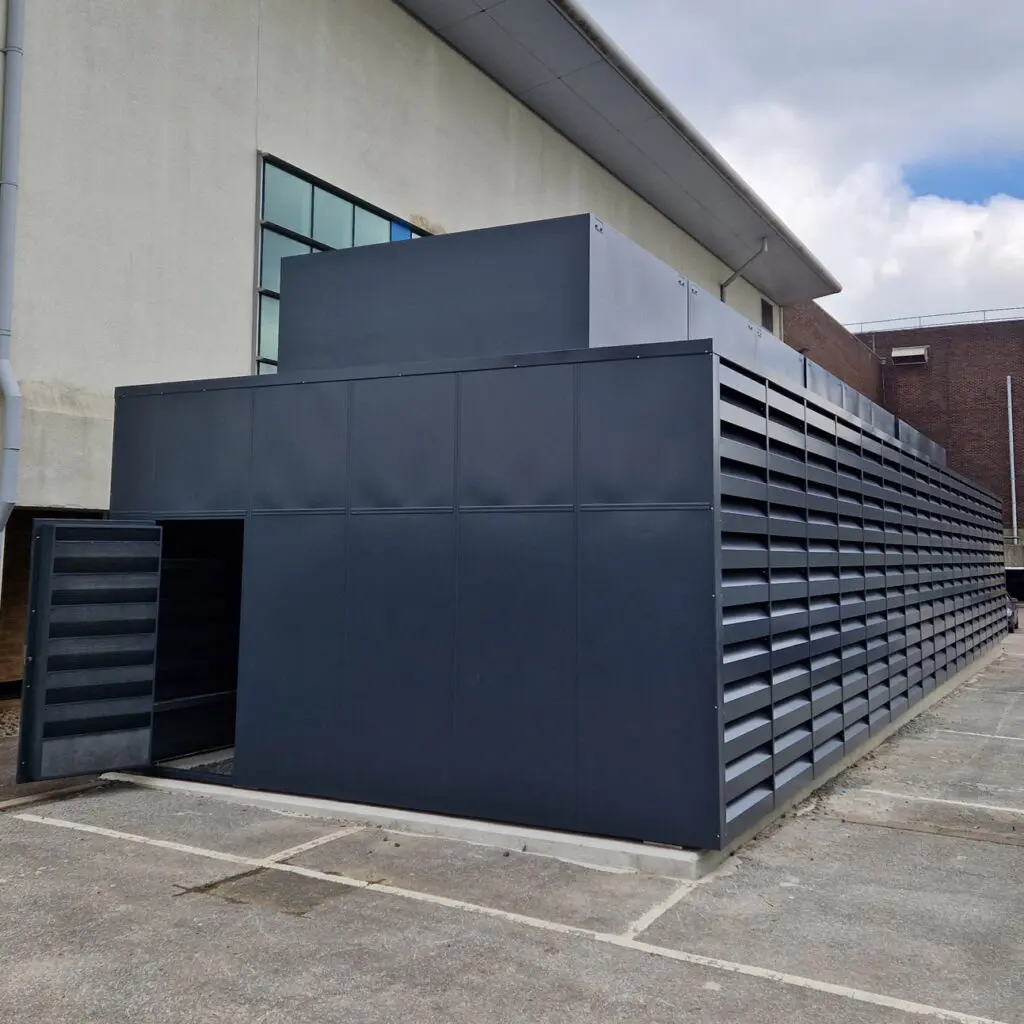
  • Workplace safety: the Control of Noise at Work Regulations 2005 require employers to reduce worker exposure when noise levels exceed 80 dB(A) daily or weekly exposure, with a legal limit of 87 dB(A) taking hearing protection into account.
  • Environmental noise: local authorities enforce limits based on the BS 4142:2014+A1:2019 standard, which assesses industrial and commercial sound in residential areas. Noise levels above the existing background noise of +5 dB(A) are likely to cause complaints.
  • Planning & compliance: industrial sites often need noise impact assessments as part of planning applications.
  • Health & productivity: beyond compliance, reducing noise exposure improves worker concentration, reduces fatigue and contributes to a safer, more comfortable environment.
Commercial acoustic enclosure

By installing a tailored acoustic enclosure, businesses can maintain operational efficiency, avoid fines or legal disputes, and demonstrate compliance with UK workplace and environmental standards.

For more information about our acoustic housing and services, or to enquire about an initial site survey, please contact us.

Testimonials

Case Studies

Sound Planning were required to supply a low resistance / high performance unit within a light well in Mount Street, London to meet the attenuation requirements of a noise impact assessment report.

Our team was commissioned to replace an existing ‘home-made’ solution for a purpose built housing for a fan assisted heating system for an outdoor marquee.

When leading UK leisure centre The Popular Stour Centre, in Ashford, Kent, needed an air source heat pump solution as part of an eco-friendly renovation, Sound Planning was happy to help.

Following an initial report by Sound Solutions that highlighted a number of challenges, Sound Planning recently completed a project at St John’s Square in Clerkenwell, London.

Contact Us

We'd love to hear from you!