
Acoustic enclosures have long been recognised as essential tools for controlling industrial and construction noise, but their other environmental benefits are becoming just as significant.
Construction managers face growing pressure to meet health and safety regulations, minimise disruptive construction sound and improve the environmental performance of their projects. As a result, solutions such as acoustic enclosures play an increasingly important role; reducing noise pollution, supporting green building certifications and helping companies reduce their carbon footprint, all while maintaining operational performance.
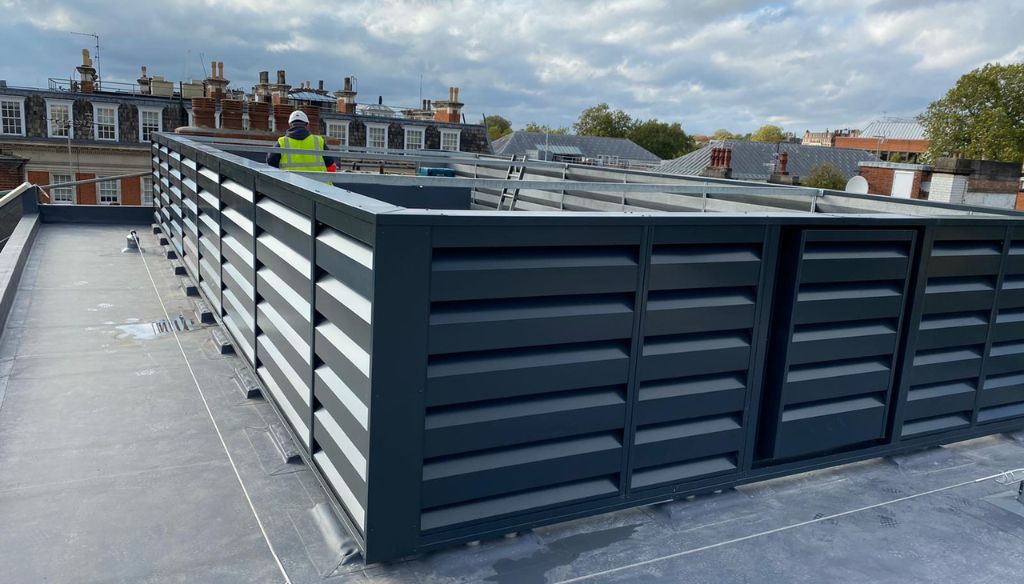
Image / Sound Planning
Understanding acoustic enclosures’ environmental role
Noise from equipment such as air source heat pumps and air conditioning units can have a significant impact on both people and environments. From disrupting sleep in residential areas to affecting workplace productivity and breaching regulatory compliance in industrial settings, noise is a growing concern.
An acoustic enclosure is a specially designed structure that surrounds noisy equipment or machinery to limit the transmission of sound into the surrounding environment. A high-quality enclosure can significantly reduce noise levels, while allowing equipment to operate efficiently. The technology combines key acoustic principles that directly support environmental protection. Absorptive materials inside the enclosure trap sound energy, rather than letting it reflect and amplify. High-density barrier walls block the transmission of noise into neighbouring spaces, while acoustic louvres and baffles maintain cooling and airflow without compromising sound control.
Access points, such as doors and panels, maintain acoustic integrity while enabling maintenance. For construction managers overseeing complex and busy sites, these design features allow noise-generating equipment to remain fully operational, with minimal disturbance to surrounding communities and ecosystems.
Environmental regulations relating to noise pollution
Local authorities in the UK enforce strict work noise regulations to govern acceptable sound levels. These span several key pieces of legislation, each designed to protect both people and the environment.
The Environmental Permitting (England and Wales) Regulations 2016 apply to large industrial installations, setting requirements for controlling noise as part of an operator’s environmental responsibilities. In Scotland, similar requirements are covered under the Pollution Prevention and Control Regulations.
Worker safety is addressed through the Control of Noise at Work Regulations 2005, limiting exposure to harmful sound levels. The Environmental Protection Act 1990 defines what constitutes a statutory noise nuisance, giving local authorities the power to act when it affects nearby communities. In addition, the Environmental Noise (England) Regulations 2006 require noise assessments to monitor and manage the impact on the wider environment. In Northern Ireland, the Control of Noise at Work Regulations (Northern Ireland) 2006 requires employers to assess risks, reduce noise exposure to a level as low as is reasonably practicable and provide hearing protection when needed.
Industrial machinery such as generators, compressors, pumps and HVAC equipment generates sound that can easily exceed acceptable limits. Reducing it by anywhere from 5dB to as much as 25dB, acoustic enclosures dramatically cut the spread of noise pollution. By partnering with a specialist acoustic consultancy, site managers can ensure the enclosure’s design is compliant with the law.
Supporting green building certifications
With businesses increasingly seeking green building certification and recognition for sustainable practices, acoustic enclosures offer measurable contributions to environmental performance. Certifications such as BREEAM and the WELL Building Standard include criteria related to noise control, energy efficiency and environmental impact.
By reducing noise emissions, improving working conditions and lowering energy consumption, acoustic enclosures demonstrate a company’s commitment to sustainability. Their use shows that a business is proactively managing environmental risks. This can reduce carbon emissions in several indirect yet powerful ways. Energy savings from improved equipment efficiency means less electricity consumption and lower associated emissions.
Preventing community complaints
Construction sites are among the most frequent sources of community noise complaints. Heavy machinery, temporary generators, pumps and air handling systems can all generate disruptive sound, especially in densely populated urban areas.
Acoustic enclosures are instrumental in helping construction businesses comply with environmental noise regulations, reducing the likelihood of complaints and helping to maintain good relationships with the community. This ensures continuity of operations without intervention from regulatory authorities.
Designed in liaison with professional acoustic consultancy services, enclosures form a comprehensive noise management strategy that supports responsible environmental stewardship.
A sustainable future
For construction managers seeking high-performance solutions that align with environmental goals, acoustic enclosures offer a unique combination of practicality, compliance and sustainability. They reduce noise pollution and contribute to long-term carbon reduction strategies, and as noise regulations tighten and sustainability expectations increase across industry, their role in the greener world will only continue to grow.